
Art is work
Matisse said work cures everything. I believe that as an artist.

I often wonder if my schedule is overloaded or unfocused, and sometimes the answer is yes—but I wouldn’t change it. The nature of my work as an artist inspired this backstory.
As I was preparing to enter eighth grade at Holy Trinity in Honolulu, my family relocated from my childhood home to a small college town in Colorado. This significant change was prompted by my father’s retirement from the University of Hawaii, as explained by my mother. There were deeper reasons. At the time, I attempted to embrace the move as an exciting opportunity; however, with hindsight, I now regard it as a disaster for every member of our family.
My father was just two years older than I am now. None of us knew anyone in this small town. As kids we eventually made friends at school. My mother found community as she dove into volunteer work at the church. All my father’s connections were lost and so was he.
After we moved, my father’s life underwent a dramatic shift. He had previously enjoyed the camaraderie of friends in the English department and maintained a daily writing routine in his home study. His role as a judge at the Shakespeare festival had brought him joy and a sense of purpose. However, with retirement and relocation, the job he had planned to accept at a private college in Hawaii disappeared. His days became filled with yard work, school drop-offs, and walking the dog. The energy from teaching and writing had disappeared—he never published another book and passed away before reaching his 80th birthday.
By the time I left for college, our family dynamic had shifted. My mother found employment, and my sister was in college, passionately pursuing life as a hippie and professional protester. In stark contrast, my father was left at home, spending his days sitting on the couch, drinking beer, and watching television. It was a life marked by emptiness and a loss of purpose.
At eighteen, I knew I wouldn’t follow my father’s path into retirement. Instead, I built a career in Visual Arts, teaching and sharing my passion. As retirement neared and my children became independent, I began selling my art in small galleries with fellow art teachers. We regularly exhibited our work, forming a supportive creative community, and I looked forward to focusing on studio time during summer breaks.
Eventually, as I reached retirement, I discovered the world of art quilting. With my children grown and our large family home sold, I saw this transition as the perfect moment to reinvent my life. My husband and I initially settled into our vacation property located in a small desert town with a warm climate. The third bedroom of our modest home served as my studio, where I began to dedicate time to my art.
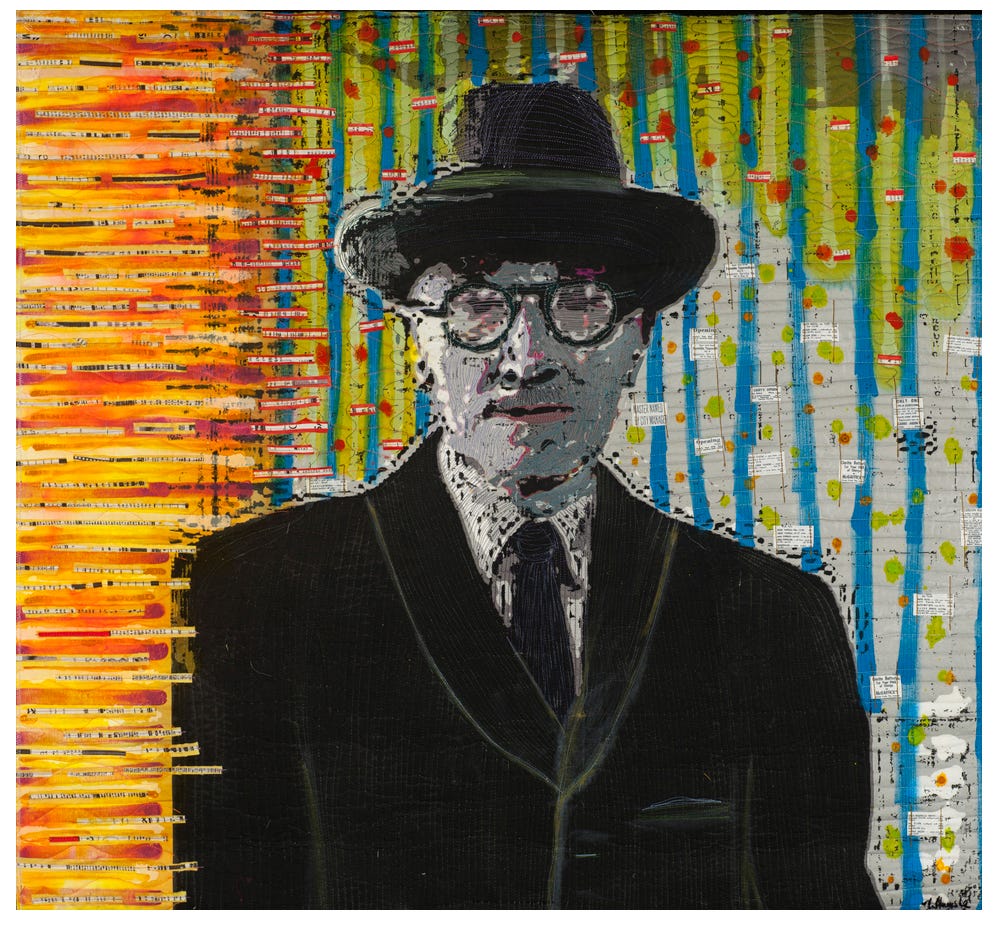
Within this close-knit community, I joined a local art association and participated in a small gallery, immersing myself in the local creative scene. Determined to build a reputation beyond my immediate surroundings, I worked diligently on developing a portfolio and entered juried exhibitions, often shipping my work outside the community to reach a broader audience
.
As my artistic ambitions grew, we found a home with more space and a dedicated studio in a larger community just forty miles away. After the move, I invested significant effort into designing a functional studio space that would support my creative practice. I joined the local quilt guild and discovered a few like-minded members who shared my interest in moving beyond strictly functional work. Over the years, these efforts allowed me to find venues both locally and regionally to exhibit my work, deepening my connections within the artistic community and expanding my opportunities to share my art.
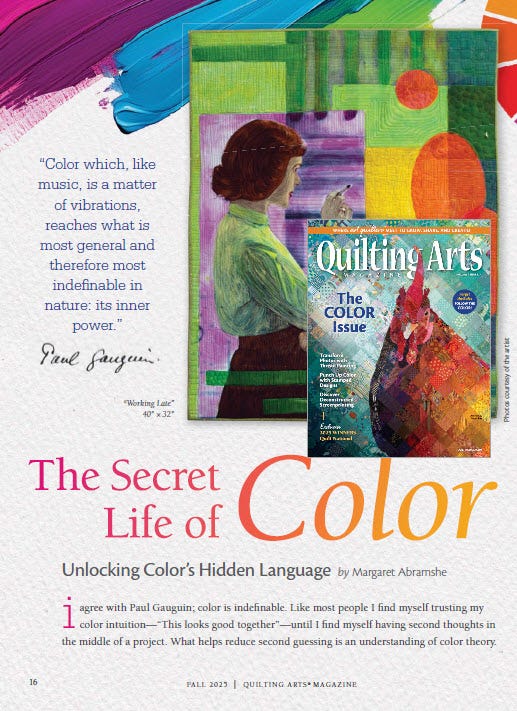
Today, my artistic journey extends beyond the studio. I enjoy writing on Substack and contributing articles to magazines such as Quilting Arts and the SAQA Journal. These writing opportunities allow me to share my experiences and insights with a wider audience, further enhancing my connection to the creative world.
In addition to writing, I have immersed myself in the world of social media. Over time, I have learned a great deal about how these platforms function and how they can strengthen the bonds within the artist community. Social media has become an important part of my life, providing a space to engage with fellow artists, exchange ideas, and showcase my work. I am actively building a YouTube channel. This endeavor is both a challenge and a source of excitement, offering new avenues for sharing my process and reaching people interested in art quilting.
Every day, I feel my knowledge expanding and my sense of community growing stronger. Retirement has been, so far; the best chapter of my life.
Most artists never really retire—they just keep creating and finding new ways to express themselves. Unlike regular jobs with clear stops, being an artist is more like a lifelong adventure, full of experiments and discoveries.
Personally, I get my best work done in the studio after lunch. I try to take care of the basics earlier in the day so I can really focus when I’m creating. This schedule helps me stay on track and dive deep into whatever project I’m working on.
Every artist figures out what works for them. There’s no “right” way to go about it—everyone’s got their own flow. Understanding how different artists tackle their days just shows how flexible and creative this world can be.
Picasso was a night owl. He often slept late, woke up around 11 a.m., and began painting in the afternoon, usually continuing well into the night He liked to work in long, uninterrupted stretches and avoided social events during creative periods.
Matisse kept a regular schedule, treating art like a full-time job. He typically began work at 9 a.m., took a short lunch, and resumed painting until evening. That discipline helped him maintain productivity well into old age.
Georgia O’Keeffe preferred early mornings for her best focus. She lived and worked close to nature in New Mexico, often painting from sunrise through the early afternoon. Her schedule was quiet and solitary, emphasizing observation and reflection.
Salvador Dalí was erratic but strategic. He claimed to work intensely for short periods, followed by long stretches of rest and daydreaming. He used naps and “paranoiac-critical” states to spark surreal ideas.
Frida Kahlo Kahlo’s schedule was shaped by her health struggles. She often painted from bed or in short sessions throughout the day. She used journaling and self-reflection as part of her creative process.
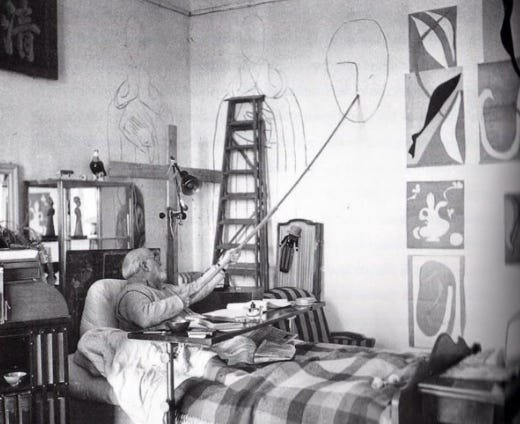
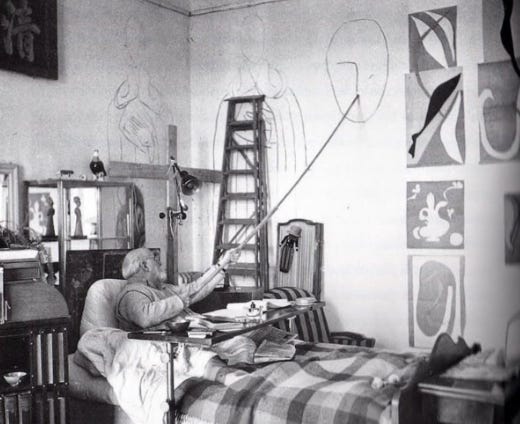
Matisse in his studio, 1930, Cannes France.
In the last years of his life Matisse was often confined to a wheelchair or bed. Instead of slowing down, he reinvented his artistic process and developed new work using painted papers. He said, “Work cures everything.” .
As I look back at my dad’s experience he needed work. I need it too and I am grateful to working as a fulltime studio artist.
Until Next Time…..
Margaret
Love this. My dad was a numbers guy and didn’t know what to do in retirement so he sat in his chair and drank his beer. Numbers in our family were very important with siblings as CPA’s, Economic majors and Finance Managers. To me, numbers were designs that floated around in the air and never really connected in any way. I expressed myself with color and fibers. Finally calling myself an artist at the age of 70!
Such fascinating insights. I am particularly touched by how your father became so out of touch once he retired. Thank you for sharing.