
Tribute to Nan
The lesson she gave me was simpler and larger than party loyalty: pay attention, stay informed, and be a good citizen.

I came across this idea for thoughts on Mother’s Day after seeing a reel I’d saved on of my instagram folders called Possible Topics. The saved reel was from an account (@delwboy) whose creator describes himself as a filmmaker and storyteller who turns cultural questions into cinematic worlds. What stopped me was the line at the top: “Mother’s Day was created as an anti-war protest.” I was intrigued.
When I did a basic search the story I found a white washed version of history. The idea for a “Mother’s Day” began in the United States in the early 20th century. The campaign to make the day a national holiday was spearheaded by Anna Jarvis who sought to honor her mother, Ann Reeves Jarvis. In 1908, Anna Jarvis organized the first official Mother’s Day celebration in West Virginia and then led a nationwide call to establish the holiday.
Her efforts to create a national holiday succeeded in 1914 when President Woodrow Wilson officially declared Mother’s Day a national holiday to be celebrated on the second Sunday in May. The association with honoring mothers as advocates, was dropped from the association with the holiday. I can’t help but imagine this was a distraction from the decades of advocacy from women like Anna Jarvis’s mother who supported womens suffrage. (Anna was deeply disappointed that the holiday she championed turned into a gift giving ritual.)
At the start of World War I in 1914 most Americans had little desire to enter the war. The United States remained committed to neutrality until growing conflict with Germany led the nation to enter the war in 1917. During the war women stepped into critical roles in factories, hospitals, and public service while men fought overseas. Their wartime contributions strengthened the growing belief that women had earned full citizenship rights, including the right to vote. President Woodrow Wilson eventually endorsed women’s suffrage, helping pave the way for the passage of the Nineteenth Amendment to the United States Constitution.
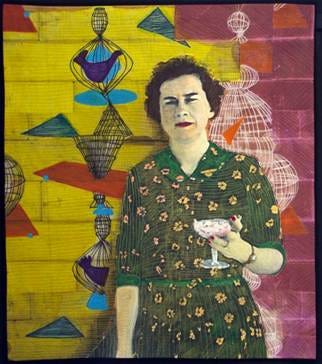
Portrait of my mother “Nan”, 2016
A popular, but false; version about the founding of Mother’s Day claims that Anna Jarvis persuaded her son to push legislation establishing the holiday. The tale is often repeated as an example of a devoted mother inspiring political action through family connections and persistence. The apocryphal story portrays Jarvis personally calling upon her son to champion the cause in Washington, helping secure official recognition of Mother’s Day in 1914 and giving her son credit for pushing the legislation into law.
Historians have thoroughly debunked this account. Anna Jarvis never married and had no children, meaning she could not have had a son in Congress.
In this case social media has served to correct the history I thought I knew. Instead of focusing on the mistaken story about Mother’s Day becoming law before women could vote, I found myself thinking about women as activists even when they had little formal political power. That shift led me to Julia Ward Howe, who imagined a version of Mother’s Day rooted not in celebration, but in protest.
Julia Ward Howe, best known for writing The Battle Hymn of the Republic, was also a passionate activist for abolition, women’s rights, and world peace. After witnessing the devastation of war, she called on mothers to unite as a force for peace and compassion. In 1870, she wrote the Mother’s Day Proclamation, urging women around the world to stand against violence and protect future generations from war. Although her proposed “Mother’s Peace Day” never became an official holiday, her message helped shape an early vision of Mother’s Day rooted in activism, unity, and hope.
“Our sons shall not be taken from us to unlearn
all that we have been able to teach them of charity, mercy, and patience.”“We women of one country will be too tender of those of another country to allow our sons to be trained to injure theirs.”
“From the bosom of the devastated earth a voice goes up with our own.
It says: ‘Disarm, Disarm!’”Quotes from the Mothers Day Proclamation
My mother was born five years after Mother’s Day became an official holiday, in the same year women won the right to vote. I like that coincidence. It makes her feel connected to a moment when women’s public role was beginning to change in visible ways.
She cared deeply about politics and, for as long as I can remember, belonged to the League of Women Voters and lobbied for legislation on behalf of that nonpartisan group while we were at school. Only later did I fully understand that she was a Republican, while my father was a committed Democrat. What stays with me most, though, is not her party affiliation but her example.
I do not remember her speaking against the protests we sometimes saw in the 1960s when we visited the University of Hawaii campus, where my father taught. I assumed all families felt the same sadness after the death of Martin Luther King Jr. and the same pride in the country’s movement toward equality. I do not remember her defending Nixon in the 1970s or Reagan in the 1980s.
All of her life she paid close attention to candidates and issues at the state and local level, where decisions most directly shaped the community around her. By the time I went to college in 1977, the country felt like it was shifting in all kinds of ways. Jimmy Carter had been elected, Star Wars had just come out, Roots was a major event on television, and Studio 54 was in its heyday. It was a vivid, energetic time to come of age. It was also the year I cast my first vote.
Looking back I can see that my political views are connected to what I learned from my mother. I belong to local groups and follow local and state media. This year I have commiteed to contribute to community groups and not national political parties.
The lesson she gave me was simpler and larger than party loyalty: pay attention, stay informed, and be a good citizen.
Until Next Time…
Margaret
Thanks for the history lesson!